
When Hair Loss Is a Symptom: A Case Study in Looking Beyond the Scalp
Some answers don’t fit in an eight-minute consultation.
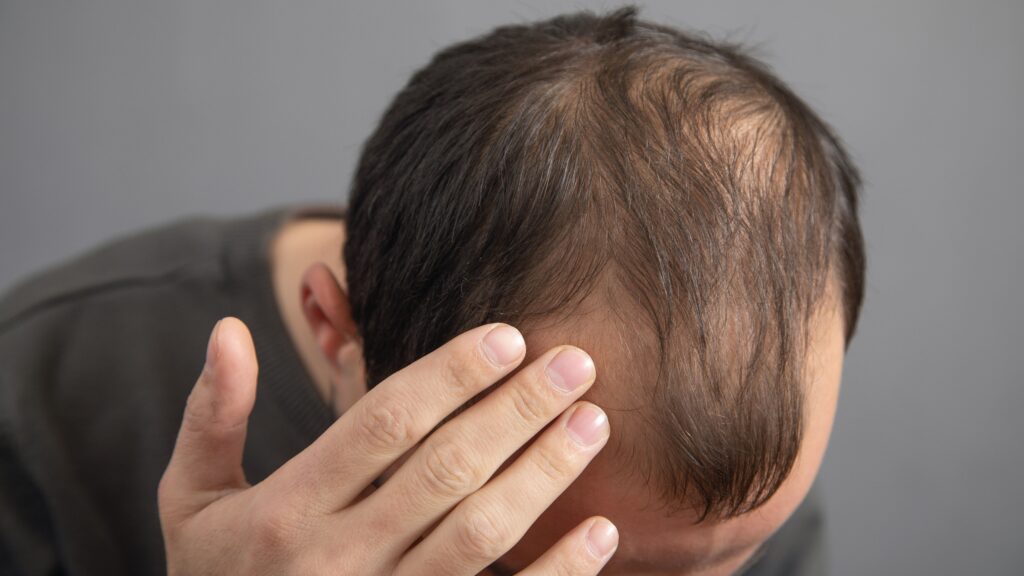
Hair loss is visible on the scalp, but the reason for it may not always be there.
When someone experiences significant hair shedding or thinning, the immediate temptation can be to look for a procedure that promises faster improvement. A more useful approach is to first understand what is happening, what could be contributing to it, and whether the hair loss pattern has been properly evaluated.
This case of a 24-year-old woman illustrates why that distinction matters.
She had been told that her hair loss was permanent. Instead of moving directly toward a hair procedure, the evaluation began with a broader clinical workup. Blood testing revealed a TSH level of 25.5, compared with the stated laboratory reference range of 0.3–4.5.
The scalp was where the problem was visible. But the investigation showed why looking beyond the scalp could be important.
The scalp was the symptom. The diagnosis required a wider view.
The Case: She Had Been Told Her Hair Loss Was Permanent
At 24, significant hair shedding can be particularly distressing.
The concern is not only about the number of hairs being lost. Patients may also worry about visible thinning, whether the follicles have been permanently damaged, and whether the hair will return to its previous density.
In this case, the patient had previously been told that the hair loss was permanent.
Rather than accepting that conclusion without further evaluation, the clinical approach focused on understanding the problem more carefully.
The starting point was not a hair package or a procedure.
It was assessment.
That meant looking at the history, examining the scalp, considering the pattern of hair loss and investigating possible factors that could be relevant to the patient’s presentation.
The First Clue Came From Blood Testing
One of the notable findings in this case was the patient’s thyroid-stimulating hormone, or TSH, level.
TSH: 25.75
Stated laboratory reference range: 0.3–4.5
The result was substantially outside the reference range provided for the case.
A laboratory value should not be interpreted in isolation, and a TSH result alone does not establish the complete cause of hair loss. It needs to be considered alongside the patient’s clinical history, symptoms, examination and, where appropriate, additional thyroid investigations.
However, the result provided an important reason to look beyond the scalp.
Thyroid dysfunction can be associated with changes in hair growth and shedding. Therefore, thyroid evaluation may be relevant in selected patients presenting with unexplained or persistent hair shedding.
The important lesson is not that every case of hair loss is caused by a thyroid problem.
It is this:
Sometimes a hair-loss investigation can reveal a medical factor that would not be visible by simply looking at the scalp.
Why the Scalp May Not Tell the Whole Story
Hair loss can have multiple contributing factors. The appearance of shedding or thinning does not, by itself, tell a clinician exactly why it is happening.
Depending on the patient’s presentation, the assessment may consider:
- The duration and pattern of hair shedding
- Changes in hair density
- Scalp appearance
- Hair shaft changes
- Family history
- Previous illnesses or physiological changes
- Nutritional factors
- Thyroid function
- Hormonal factors where clinically relevant
- Autoimmune conditions where indicated
- Medication history
- Previous hair treatments
- Whether the hair loss appears scarring or non-scarring
Not every patient requires every investigation.
A responsible workup is not about ordering a long list of tests simply because they are available. It is about identifying which questions need to be answered for that particular patient.
That is where clinical reasoning becomes important.
What Should a Proper Hair Loss Consultation Look At?
A meaningful hair-loss consultation should go beyond asking, “How much hair are you losing?”
It should try to understand the pattern.
1. The Patient’s History
The consultation may explore:
- When the shedding started
- Whether it began suddenly or gradually
- Whether shedding occurs throughout the day or mainly during washing
- Whether the patient has noticed visible thinning
- Whether particular areas are more affected
- Whether there are scalp symptoms such as itching, scaling or discomfort
- Whether there has been a recent illness or other significant change
- Family history of hair loss
- Previous medications or treatments
- Previous investigations
These details help establish the clinical context.
2. Examination of the Scalp
The scalp should be examined rather than assessed only through a patient’s description.
A clinician may look for changes in:
- Hair density
- Hair shaft appearance
- Scalp skin
- Follicular openings
- Distribution of hair loss
- Signs that may suggest inflammation
- Features that may help distinguish different types of alopecia
This examination can help determine whether further assessment is necessary.
3. Magnified Assessment With Trichoscopy
Trichoscopy is a magnified examination of the scalp and hair that can provide additional information when assessing hair loss.
It allows a clinician to observe features that may not be obvious during an ordinary visual examination.
The purpose is not simply to take a closer photograph.
It is to obtain clinical information that may help characterize the hair-loss pattern and contribute to the diagnostic process.
This is particularly useful when the visible appearance alone does not provide enough information.
Scarring or Non-Scarring Hair Loss: Why the Difference Matters
One important question during a hair-loss assessment is whether the condition appears to be scarring or non-scarring.
The distinction matters because the underlying processes can be different.
In scarring forms of hair loss, damage to the follicle can result in permanent loss of the follicular structure.
In non-scarring hair loss, the follicle is not destroyed in the same way.
This is not a distinction that should be made simply from an online photograph or a general description.
A proper clinical examination is important.
It also explains why the same hair treatment should not automatically be offered to every patient who reports hair fall.
The treatment decision depends on what the assessment shows.
Why Blood Tests Can Be Part of a Hair Loss Workup
Patients often ask:
“What blood tests should I take for hair loss?”
There is no single blood-test package that applies to every patient.
Depending on the individual’s symptoms, history and examination, a clinician may consider investigations related to areas such as:
- Thyroid function
- Iron status, including ferritin when appropriate
- Nutritional factors
- Autoimmune conditions where clinically indicated
- Other medical factors suggested by the patient’s presentation
The purpose of testing should be to answer a clinical question.
In this case, the thyroid result became particularly important because the TSH was 25.75, compared with the stated reference range of 0.3–4.5.
That finding needed medical interpretation rather than being treated as an isolated number.
Finding an Abnormal Result Is Not the Same as Finding the Diagnosis
This distinction is important in healthcare content.
An abnormal laboratory result can be a clue.
It does not automatically explain everything the patient is experiencing.
A clinician needs to correlate the result with:
- The patient’s symptoms
- Medical history
- Physical examination
- Scalp findings
- Other investigations where necessary
- The overall clinical picture
This prevents a common mistake: taking one abnormal result and assuming it explains every symptom.
The goal of a workup is not simply to find something abnormal.
The goal is to understand what is relevant to the patient.
The Case Sheet: Where Clinical Thinking Comes Together
One of the most valuable parts of a complex consultation may be something patients never see: the clinical case sheet.
A case sheet brings different pieces of information together.
It can include:
- Patient history
- Clinical findings
- Examination observations
- Differential considerations
- Investigation results
- Relevant literature
- Follow-up observations
- Questions requiring further assessment
A diagnosis is rarely built from one isolated observation.
It is developed by correlating findings.
In more complex cases, discussion with experienced colleagues may also provide another clinical perspective when appropriate.
This is why a consultation should not be viewed simply as a short appointment followed by a predetermined treatment.
The thinking happens before the protocol.
Diagnosis First. Protocol Second.
Hair-loss marketing can sometimes make the process appear simple:
Hair loss + procedure = regrowth
Clinical decision-making is more nuanced.
A more appropriate pathway can be:
Concern → history → examination → relevant investigations → clinical interpretation → diagnosis or working diagnosis → treatment decision → follow-up
Not every patient follows exactly the same pathway.
Some patients may require additional investigation.
Some may need treatment for an underlying medical issue.
Some may benefit from hair-directed treatment.
Some may require a different approach altogether.
And some procedures may not be appropriate for a particular patient.
That is why the treatment should follow the assessment.
Day 0 vs Day 11: Reduced Shedding Is Not Regrowth
The follow-up images in this case provide another important lesson in responsible communication.
The early change should be described as:
Reduced shedding.
It should not be described as immediate hair regrowth.
Why?
Because reduced hair fall and new hair growth are two different things.
Hair follicles operate through a biological growth cycle, and visible changes in hair density generally require more time to assess.
An early reduction in shedding may be an encouraging observation, but it should not be converted into a promise of immediate regrowth.
This distinction is particularly important when presenting clinical cases online.
Eleven days can show an early change in shedding.
Eleven days cannot establish the final hair-regrowth outcome.
That is why the case should be documented honestly.
Why Consistent Photography Matters in Hair Loss Follow-Up
If photographs are used to monitor hair changes, consistency matters.
Useful documentation can involve keeping factors such as:
- Camera position
- Distance
- Lighting
- Scalp section
- Hair positioning
- Measurement reference
as consistent as possible.
In this case, ruler-marked scalp photographs provide a more structured way to document the area being followed.
But photographs still have limitations.
They can document change.
They cannot independently establish the cause of hair loss or determine whether a particular treatment was responsible for an outcome.
Clinical context remains essential.
Three Questions to Ask Before Starting a Hair Treatment
Before choosing a hair treatment, patients can ask questions that help them understand the basis of the recommendation.
1. Have the relevant medical factors been considered?
Depending on your history and presentation, your doctor may consider investigations such as thyroid testing, iron-related testing or other blood tests.
Not everyone needs the same investigations.
The important question is why a particular test is being recommended.
2. Has my scalp been examined properly?
Ask whether the consultation includes a detailed scalp examination and whether magnified assessment, such as trichoscopy, may be useful in your case.
3. Is my hair loss scarring or non-scarring?
This can be an important part of understanding the nature of the hair loss.
The distinction should be based on clinical assessment rather than assumption.
Why We Don’t Reduce Hair Loss to a Treatment Package
Two people can both say:
“My hair is falling.”
But they may not have the same underlying problem.
One patient may have an issue requiring medical evaluation.
Another may have a specific scalp condition.
Another may have a pattern of hair loss influenced by family history.
Another may have more than one contributing factor.
That is why a predetermined treatment package cannot replace diagnosis.
A better question is:
What is contributing to my hair loss, and what approach is appropriate for my individual situation?
Sometimes the answer may involve a procedure.
Sometimes it may involve medical management.
Sometimes it may involve further investigation before treatment is selected.
The important point is that the decision should be based on the patient’s clinical picture.
Does Every Person With Hair Loss Need a Thyroid Test?
No. Thyroid testing is not automatically required for everyone with hair loss.
A clinician may consider thyroid evaluation when the patient’s symptoms, history or examination make thyroid dysfunction relevant to the investigation.
In this case, the TSH result of 25.75, against the stated reference range of 0.3–4.5, was an important finding that required appropriate medical interpretation.
The case therefore demonstrates the value of investigating relevant systemic factors rather than assuming that every hair-loss problem begins and ends at the scalp.
Does Hair Loss Always Mean Permanent Hair Loss?
No. Hair shedding does not automatically mean that hair loss is permanent.
Different forms of hair loss have different causes and clinical courses.
Some involve temporary changes in the hair-growth cycle, while others can involve more persistent follicular damage.
The distinction requires appropriate clinical assessment.
If someone has been told that their hair loss is permanent, useful questions include:
- What is the diagnosis?
- How was the diagnosis established?
- Has the scalp been examined carefully?
- Has trichoscopy been considered where appropriate?
- Are there signs of scarring?
- Have relevant medical contributors been considered?
- What is the expected timeline for any improvement?
- How will progress be monitored?
These questions do not guarantee a particular outcome. They help patients understand the reasoning behind their treatment plan.
What This Case Teaches Us About Hair Loss
This case is not primarily about a procedure.
It is about how a hair-loss problem is investigated.
The symptom may not tell the whole story.
Hair shedding appears on the scalp, but relevant contributing factors may require a broader medical evaluation.
A blood test can provide an important clue.
The TSH result in this case was significantly outside the stated laboratory reference range, making thyroid evaluation an important part of the clinical picture.
One result does not automatically equal a diagnosis.
Laboratory findings must be interpreted in the context of the patient.
Trichoscopy can add useful information.
Magnified examination may help clinicians characterize hair and scalp findings that are difficult to assess with the naked eye.
Scarring and non-scarring hair loss need to be distinguished.
The underlying processes can differ, making clinical assessment important.
Reduced shedding is not the same as regrowth.
Early improvement should be described accurately rather than presented as instant hair growth.
Treatment should follow assessment.
The appropriate approach depends on the individual patient’s clinical findings.
Hair Loss Consultation in Mylapore, Chennai
For patients looking for a hair loss consultation in Chennai, the first step does not necessarily need to be selecting a procedure.
A more useful starting point is understanding the pattern of hair loss and determining whether there are relevant factors that need further evaluation.
Reshape is located in Bhaskarapuram, Mylapore, Chennai, and provides aesthetic and hair-related clinical care.
The clinic’s approach can be represented through a simple principle:
Look at the whole patient, not just the scalp.
For someone experiencing persistent shedding or thinning, a consultation can provide an opportunity to discuss the pattern of hair loss, understand what needs to be assessed and determine the appropriate next step.
About Dr. Aneesha M
Dr. Aneesha M is an Aesthetic Physician at Reshape.
Qualifications: B.D.S., F.D.S., F.M.C.
Her professional profile focuses on aesthetic medicine and clinical care. The approach to a hair-loss case should be based on individual assessment rather than assuming that the same treatment is suitable for every patient.
Frequently Asked Questions
Can thyroid problems cause hair loss?
Thyroid dysfunction can be associated with changes in hair growth and shedding. However, hair loss has many possible causes, so thyroid dysfunction should not automatically be assumed to be the cause without appropriate clinical evaluation.
Is a TSH of 25.75 high?
A TSH of 25.75 is above the 0.3–4.5 reference range stated for this case. The result requires appropriate medical interpretation and may require further thyroid evaluation depending on the patient's clinical situation.
What blood tests are useful for hair loss?
There is no universal blood-test panel for every person with hair loss. Depending on the presentation, a clinician may consider thyroid function, iron status, nutritional factors, autoimmune investigations or other tests when clinically indicated.
What is trichoscopy?
Trichoscopy is a magnified examination of the scalp and hair. It can help clinicians observe features that may not be clearly visible during a routine examination and can provide additional information when evaluating hair loss.
What is scarring hair loss?
Scarring hair loss involves damage to the hair follicle that can result in permanent loss of the follicular structure. It needs appropriate clinical assessment because its management can differ from non-scarring forms of hair loss.
What is non-scarring hair loss?
Non-scarring hair loss refers to hair loss where the follicle is not destroyed in the same way as in scarring conditions. Different causes can produce non-scarring hair loss, so identifying the specific pattern remains important.
Does less hair shedding mean new hair is growing?
Not necessarily. Reduced shedding and new hair growth are separate changes. A reduction in shedding can occur before visible improvement in hair density becomes apparent.
Can hair loss be diagnosed from a photograph?
Photographs can be useful for documenting changes over time, but they cannot always establish the cause of hair loss. Clinical history and examination may be required, with additional investigations when appropriate.
Should I start a hair treatment before finding the cause?
The appropriate sequence depends on the individual case. Understanding the likely cause and pattern of hair loss can help a clinician determine whether a particular treatment is appropriate.
When should I consult a doctor about hair shedding?
A consultation may be appropriate when shedding is persistent, significant, associated with visible thinning or scalp changes, or causing concern about an underlying medical issue.
The Takeaway
A hair-loss consultation should not always end with a procedure.
Sometimes the most important step is asking a better question.
Why is this patient’s hair falling?
In this case, a 24-year-old woman who had been told that her hair loss was permanent underwent further investigation. Her TSH was 25.75, compared with the stated reference range of 0.3–4.5.
That finding demonstrated why the investigation could not stop at the scalp.
The scalp showed the symptom.
The clinical workup helped identify an important area that needed attention.
And that is the central lesson:
Good hair care starts with understanding the problem before deciding how to treat it.
Considering a Hair Loss Consultation in Mylapore, Chennai?
If you are experiencing persistent hair shedding or thinning, a clinical consultation can help determine what needs to be assessed and whether further investigation is appropriate.
Reshape
149, No: 1 Luz Church Road, Bhaskarapuram, Mylapore, Chennai – 600004
Dr. Aneesha M
Aesthetic Physician
B.D.S., F.D.S., F.M.C.
Consult the Reshape team to discuss your hair and scalp concerns and understand the appropriate next steps.